Medical and technical equipment
Treatment Room Equipment and Technical Device Delivery
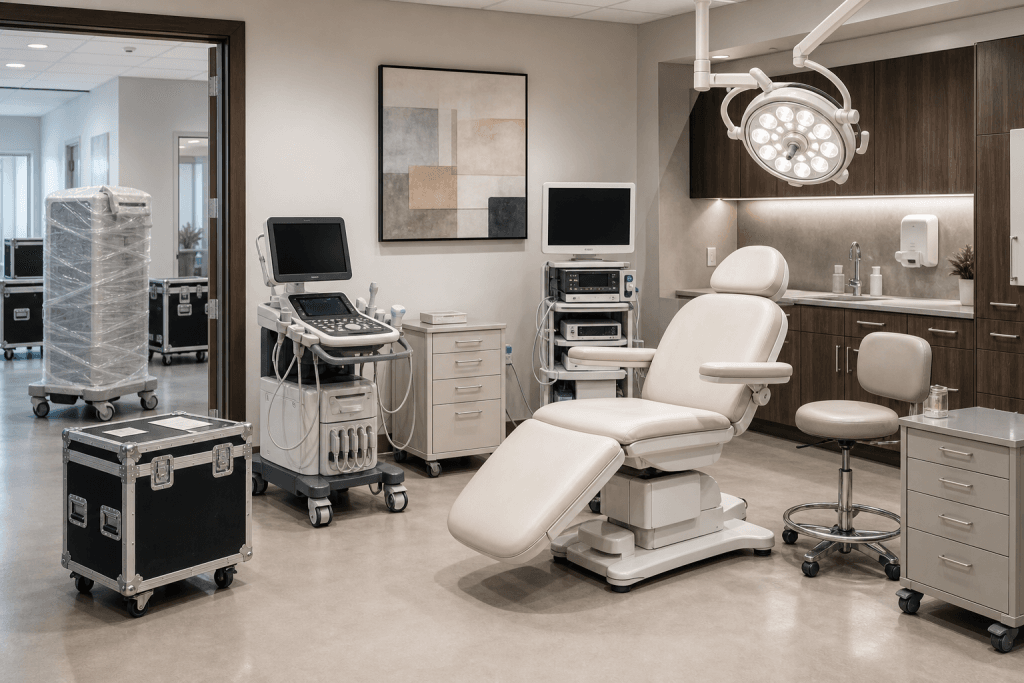
Treatment room equipment and technical devices need delivery plans built around the room, not just the address. Access, placement, condition notes, appointment timing, and receiver coordination all matter.
Article guide
What this article helps plan
A business shipper is looking for practical delivery guidance for treatment room equipment or technical devices entering a clinical, demo, or facility environment.
- Who needs to be aligned before pickup or delivery.
- Which product details affect the freight path.
- Where timing, access, condition, and final placement can create risk.
Treatment room equipment and technical devices often have a destination more specific than a building address. They may need to reach a room, demo space, clinic area, training environment, office suite, or facility staging location. That makes delivery planning more detailed than simply moving freight to a dock. The product, the site, and the final handoff all need to be understood before arrival.
Why this product needs planning
For medical equipment brands, device companies, dealers, and facilities teams, the delivery experience can influence how smoothly a customer project begins. A treatment chair, cart, device cabinet, monitor system, therapy device, diagnostic-adjacent product, or technical accessory may be needed for an opening, replacement, training session, demonstration, or scheduled installation. Late, unclear, or poorly coordinated delivery can create friction between sales, operations, and the receiving team.
Details to confirm before pickup
- Product dimensions, weight, finish sensitivity, and packaging condition.
- Pickup and delivery addresses, access notes, receiving contacts, and appointment windows.
- Whether the delivery requires inside placement, stairs, elevators, dock access, or room-ready handling.
Destination and receiving details
The first question is what the equipment requires. Dimensions, weight, packaging, mobility, fragile components, finished surfaces, accessories, and handling notes should be documented. Some items are palletized. Some are crated. Some roll. Some have detachable parts. Some need to stay upright or avoid pressure on specific surfaces. These details shape the service path and help the receiving team prepare.
How HHX helps coordinate the move
The second question is where the equipment actually goes. "Deliver to the clinic" may not be enough. Is the product going to a treatment room, storage area, demo suite, equipment room, reception area, or installation staging point? Is there an elevator? Are there narrow turns, doors, or thresholds? Is dock access available? Does the delivery need liftgate support? Is the room ready, or should the equipment be held at a receiving area?
Final placement should be treated carefully. HHX content should not promise installation unless that scope is specifically approved elsewhere, but delivery planning can still include placement expectations. If the receiver needs the equipment brought inside, placed in a room, staged near an installation area, or handed off to a facilities contact, that should be communicated clearly. The difference between dock delivery and room-ready delivery is significant.
Appointment timing is often tied to people. A clinic manager, facilities lead, technician, sales representative, or vendor contact may need to be present. If the device is part of a scheduled room setup, a delivery window that is too broad may cause delays. The receiving contact, phone number, appointment window, check-in instructions, and closeout expectations should be known before the truck arrives.
Condition and documentation handoffs are practical, not decorative. The receiver may need to inspect packaging, confirm visible condition, count components, retain paperwork, or report exceptions. If reference numbers, model identifiers, or accessory lists are relevant to the shipper's process, they should be included in the shipment notes. The goal is to keep delivery confirmation connected to the product being delivered.
Technical devices also raise packaging and protection questions. Screens, control panels, casters, arms, cables, trays, drawers, and finished shells can all affect how an item should be handled. Good freight coordination makes those points visible early. It does not wait for the final delivery team to guess.
HHX helps coordinate treatment room and technical device delivery by aligning the product profile with the receiving environment. The plan should answer the operational questions: what is moving, how is it protected, where does it need to go, who receives it, what access constraints exist, and what handoff confirms the delivery is complete?
For business shippers, treatment room equipment is not household moving work and not anonymous freight. It is a product delivery into a working environment. When access, appointment timing, condition notes, and receiver coordination are handled early, the delivery has a much better chance of matching the expectations around the equipment.
A strong shipment request should describe both the device and the room. The device details might include size, weight, packaging, mobility, accessories, screens, controls, and fragile points. The room details might include floor level, elevator access, doorway clearance, receiving hours, staging area, and who can accept the delivery. If the equipment should be placed near a treatment room, demo area, or installation zone, that expectation should be stated clearly. HHX can then discuss the move in terms of the product and its actual destination, not only the street address.
Planning details to send HHX
Encourage readers to contact HHX with product type, room destination, dimensions, packaging, access path, appointment window, receiving contact, and any final placement or staging expectations.Next step for shippers
Send the shipment details before the freight path is assumed.
HHX can review product dimensions, access notes, timing, packaging, and delivery requirements before the shipment is routed.
Contact HHX