Trade shows and events
Road Cases, Booth Panels, and Return Freight After a Show
Return freight after a show is easiest when it is planned before teardown starts. Road cases, booth panels, crates, labels, pickup timing, and next destinations need clear ownership while the event team is still moving fast.
Article guide
What this article helps plan
A trade show or event team needs to plan outbound freight after teardown, including road cases, booth panels, labels, pickup timing, and return routing.
- Who needs to be aligned before pickup or delivery.
- Which product details affect the freight path.
- Where timing, access, condition, and final placement can create risk.
The outbound move after a trade show can be just as important as the move-in. Once the show closes, road cases, booth panels, counters, display components, samples, lighting, AV cases, signage, and fabricated pieces all need to move from the booth to the next destination. The team may be working under teardown pressure, venue rules, decorator deadlines, and travel schedules. That is not the moment to discover that return freight was never fully planned.
Why this product needs planning
Post-show freight has a different rhythm from inbound freight. Inbound shipping is about getting materials to the booth before the event opens. Return freight is about closing the loop cleanly when the floor is busy, time is short, and many exhibitors are trying to move out at once. A good plan starts before the show begins.
Details to confirm before pickup
- Product dimensions, weight, finish sensitivity, and packaging condition.
- Pickup and delivery addresses, access notes, receiving contacts, and appointment windows.
- Whether the delivery requires inside placement, stairs, elevators, dock access, or room-ready handling.
Destination and receiving details
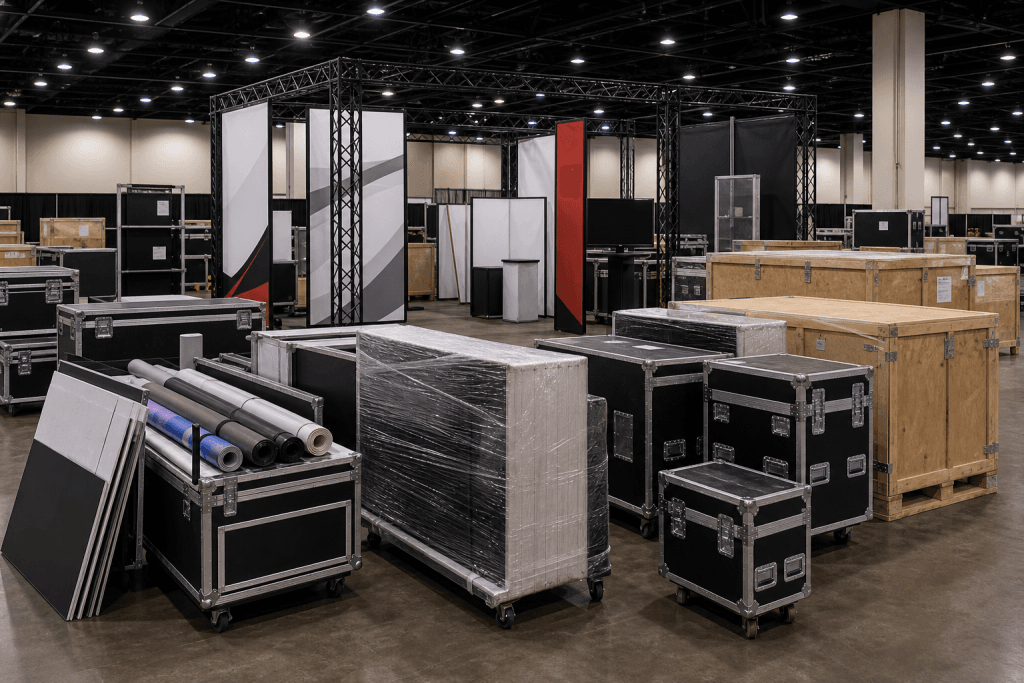
Road cases are often the backbone of event freight. They protect repeat-use materials and keep pieces organized between shows. But road cases only help if they are counted, labeled, and routed correctly. A case that contains lighting components should not be confused with a case that holds display hardware. A booth panel crate should not be sent to storage if it is needed at the next event. Case counts, labels, destinations, and contents matter.
How HHX helps coordinate the move
Booth panels and fabricated components create their own risks. Panels may be large, finished, fragile at the corners, or built for a specific installation sequence. They can be damaged during rushed teardown if packaging and handling notes are unclear. If the panels are going back to a shop, warehouse, client facility, or next venue, the return destination should be set before they are packed.
The most practical return freight question is simple: where does everything go next? Some materials return to the exhibitor. Some go to an exhibit house. Some move to the next show. Some go into storage. Some samples may need to ship separately. Without a clear routing plan, teardown becomes a sorting problem under pressure.
Labels and paperwork should be prepared early. Public content should avoid promising control over every venue or decorator process, but the shipper can still prepare the details that reduce confusion: case count, destination, contact names, pickup windows, freight descriptions, reference numbers, and special handling notes. Outbound labels should be available before the team is packing the booth, not after the aisle is already full of freight.
Timing is also critical. Teardown windows can be narrow, and outbound freight may need to be ready for pickup at a specific time. The show team should know when materials need to be packed, where they should be staged, who is responsible for the handoff, and who confirms the freight has moved. If the next destination has receiving hours or appointment requirements, those details need to be included too.
Condition matters after the show. Displays, panels, cases, counters, and samples may have been handled by multiple teams during setup and teardown. Notes about damaged packaging, missing pieces, or visible product issues should be captured while the team still has context. Return freight is not only about moving items away from the venue. It is about preserving the next use of those materials.
HHX helps event teams think through the full freight cycle: inbound, show-site handoff, teardown, outbound pickup, and return destination. The best post-show plan is not dramatic. It is organized. It makes the case count visible, the labels ready, the pickup window clear, and the next destination known.
For exhibitors and event companies, return freight is part of protecting the investment in the booth. Road cases, booth panels, and display materials are often reused, reconfigured, and redeployed. A clear outbound plan helps those assets leave the show floor with the same level of intention that brought them there.
Teams can make the return move easier by building a simple outbound checklist before the event: what cases are returning, what pieces go to storage, what items move to the next show, who confirms the packed count, and who is available if the venue or carrier needs clarification. That checklist does not need to be complicated. It needs to be visible before teardown begins. When every road case and panel has a destination, the post-show freight process becomes a planned closeout rather than a rushed recovery effort.
Planning details to send HHX
Prompt readers to contact HHX with show name, venue, teardown window, case count, booth panel details, outbound pickup needs, return destination, and next-event routing.Next step for shippers
Send the shipment details before the freight path is assumed.
HHX can review product dimensions, access notes, timing, packaging, and delivery requirements before the shipment is routed.
Contact HHX