Trade shows and events
Props, Fabricated Environments, and Event Build Materials
Props and fabricated environments have deadlines, dimensions, fragile surfaces, and venue rules. The freight plan should account for move-in timing, handling notes, booth materials, and return freight before the event starts.
Article guide
What this article helps plan
An event or fabrication team needs to coordinate freight for props and event build materials around fixed show dates, venue rules, move-in windows, piece counts, and return freight requirements.
- Who needs to be aligned before pickup or delivery.
- Which product details affect the freight path.
- Where timing, access, condition, and final placement can create risk.
Props, fabricated environments, and event build materials move on a different clock than ordinary freight. The destination is often a convention center, event venue, hotel ballroom, branded activation space, retail pop-up, studio, or temporary build site with fixed move-in windows and limited time to solve problems.
Why this product needs planning
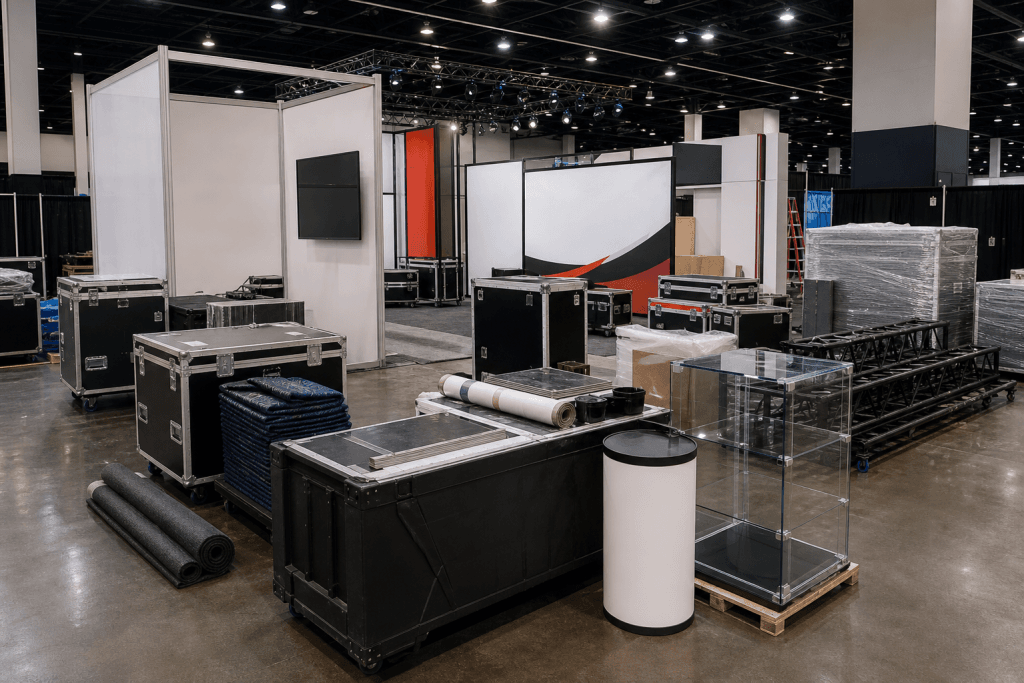
For prop fabricators, event companies, exhibit builders, brand activation teams, and show producers, the shipment may include scenic panels, oversized props, display cases, counters, truss sections, road cases, rolled graphics, lighting components, wrapped surfaces, fabricated structures, and fragile decorative elements. These pieces are not always standard freight shapes, and they often arrive with a schedule attached.
Details to confirm before pickup
- Product dimensions, weight, finish sensitivity, and packaging condition.
- Pickup and delivery addresses, access notes, receiving contacts, and appointment windows.
- Whether the delivery requires inside placement, stairs, elevators, dock access, or room-ready handling.
Destination and receiving details
The first planning requirement is the item list. Event materials should be identified by piece count, dimensions, weight, packaging, orientation notes, fragility, and whether pieces must stay grouped together. If the shipment includes road cases, crates, loose hardware, graphics, lighting, or display elements, those components should be visible in the delivery plan before pickup.
How HHX helps coordinate the move
Venue access is central. A trade show or event site may have marshaling rules, dock schedules, move-in windows, material handling requirements, badge or security restrictions, elevator limits, service corridors, and tight receiving procedures. A shipment can be physically ready and still miss the useful delivery window if venue instructions are unclear.
Surface protection matters because many props and fabricated environments are customer-facing. Painted surfaces, laminate panels, finished counters, glass display cases, wrapped graphics, foam or sculpted elements, and decorative finishes can be damaged by rough handling or poor packaging. The logistics plan should distinguish between durable cases and finished pieces that need careful handling.
Timing is usually the highest-risk part of the move. Event teams may have installers, electricians, designers, client representatives, and venue staff waiting on the shipment. If materials arrive late or incomplete, the issue can affect the build schedule and the final presentation. The freight conversation should start with the event date, move-in window, and latest practical arrival time.
Labeling and grouping reduce confusion during setup. Cases, panels, graphics, props, and hardware may need to be organized by booth area, room, activation zone, or installation phase. When the receiving team knows what each piece is and where it belongs, setup becomes easier and the event team has fewer handoff questions.
Return freight should be planned before the show starts. Teardown moves quickly, and road cases, booth panels, props, samples, and display components can scatter across the venue. If pickup timing, return destination, labels, contact names, and piece counts are not defined before teardown, the return move can become harder than the inbound shipment.
HHX should not present every event shipment as the same service. Some materials may move through LTL or FTL freight. Others may need trade show logistics or higher-care coordination because of fixed venue windows, fragile finishes, oversized dimensions, multiple pieces, or return freight requirements. The service path should follow the product and the event schedule.
For business shippers, the useful details are practical: what is moving, how many pieces, how it is packaged, where it goes, when the venue can receive it, who is receiving it, and what happens after the event. Those details help keep the move aligned with the show instead of leaving the event team to resolve freight problems at the dock.
Before requesting support, shippers should gather the event date, venue name, booth or room location, move-in and move-out windows, item list, dimensions, weights, road case count, packaging details, photos, handling notes, receiving contact, venue instructions, and return freight destination. That information gives HHX the context needed to discuss a freight plan that fits the event.
Next step for shippers
Send the shipment details before the freight path is assumed.
HHX can review product dimensions, access notes, timing, packaging, and delivery requirements before the shipment is routed.
Contact HHX