Trade shows and events
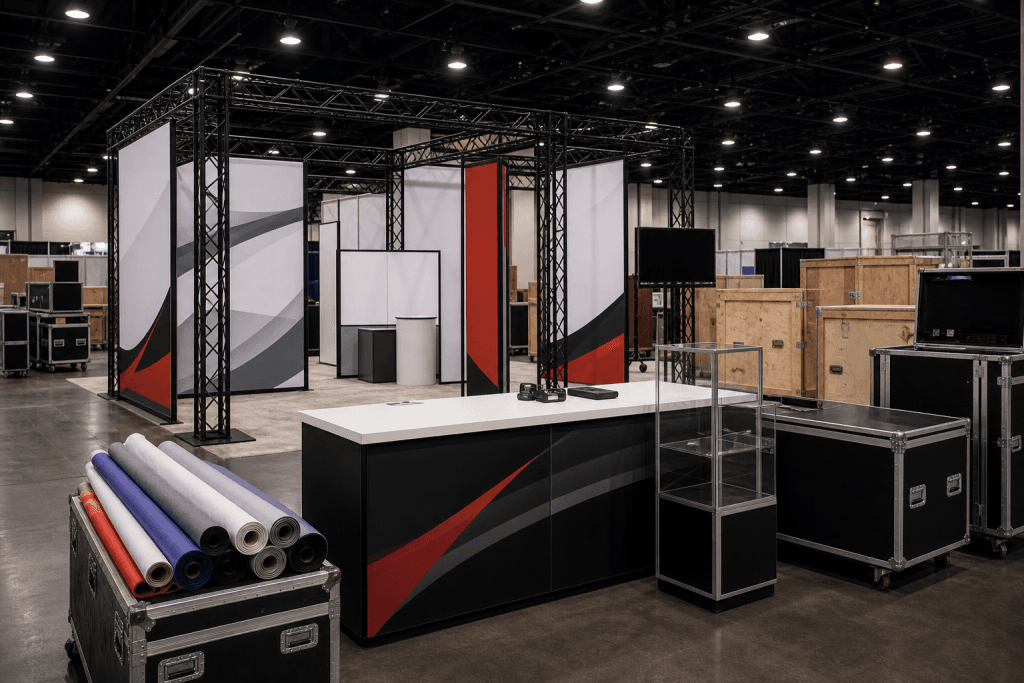
Trade Show Booth Freight With Truss, Signage, and Display Cases
Booth freight works on the show clock. Truss, signage, counters, display cases, samples, and crates need counts, labels, receiving details, move-in timing, and return plans aligned before the event team is waiting.
Article guide
What this article helps plan
An exhibitor or event team needs to coordinate booth freight that includes multiple components, fixed move-in timing, venue receiving rules, and return freight.
- Who needs to be aligned before pickup or delivery.
- Which product details affect the freight path.
- Where timing, access, condition, and final placement can create risk.
Trade show booth freight is different from ordinary business freight because the shipment is tied to a fixed event timeline. Truss, signage, counters, display cases, product samples, lighting cases, crates, and fabricated booth components all need to arrive against a show schedule. If the freight is late, mislabeled, incomplete, or difficult to receive, the event team may have very little time to recover.
Why this product needs planning
For exhibitors, booth builders, event companies, exhibit houses, and brand teams, the freight plan should start with the show clock. The venue, booth number, move-in window, show dates, teardown timing, and return destination are not secondary details. They define the work. A carrier handoff that ignores those constraints can create problems at the exact moment the team needs certainty.
Details to confirm before pickup
- Product dimensions, weight, finish sensitivity, and packaging condition.
- Pickup and delivery addresses, access notes, receiving contacts, and appointment windows.
- Whether the delivery requires inside placement, stairs, elevators, dock access, or room-ready handling.
Destination and receiving details
The product mix is usually complex. Truss may be long, heavy, or packed in sections. Signage may have fragile faces, edges, lighting components, or specific orientation needs. Display cases can include glass, hardware, shelves, locks, or finishes that matter once the booth opens. Counters, walls, flooring, samples, literature, monitors, and activation pieces may all ship together but need different handling notes. Counts, dimensions, weights, labels, and photos help prevent confusion.
How HHX helps coordinate the move
Venue receiving adds another layer. Some freight moves to an advance warehouse. Some moves direct to show site. Some requires marshaling, decorator coordination, dock appointments, material handling paperwork, booth numbers, or specific receiving contacts. Public blog content should not overstate authority over show rules, but the planning point is simple: the shipment details need to match the venue's receiving process.
Move-in timing is where trade show logistics becomes unforgiving. A booth is not useful if half the components arrive after the installation window. Truss without signage, counters without display cases, or samples without fixtures can stall setup. The plan should make crate counts and piece lists visible so the team knows what is expected and can identify missing pieces quickly.
Packaging and labeling deserve careful attention. Road cases, crates, skids, cartons, and wrapped components should be labeled in a way that supports the receiving team. If there are booth numbers, destination labels, return labels, fragile notes, or sequence notes, they should be prepared before pickup rather than during a rushed dock handoff. The more organized the freight is before it leaves, the better chance the move-in has of staying calm.
Return freight should be planned before the show opens. After teardown, event teams are tired, venues are busy, and outbound deadlines can be tight. The return destination, outbound pickup window, case count, labels, next-event routing, and closeout contact should already be known. Treating return freight as an afterthought is one of the easiest ways to create post-show confusion.
HHX helps coordinate booth freight by tying product details to the event schedule. What is moving? How many cases or crates are involved? What is fragile? When is move-in? Who receives at the venue? What happens after teardown? Those questions keep the shipment attached to the real-world timeline of the show.
Trade show booth freight is not only about moving materials from one address to another. It is about getting the right components to the right place before the show floor is waiting. For business teams, that means the freight plan has to be practical, complete, and built around the event from the beginning.
The strongest booth freight requests include both product details and event details. Product details include crate count, dimensions, weights, labels, fragile pieces, and any sequence or handling notes. Event details include show name, venue, booth number, move-in target, receiving rules, decorator or venue contact, show dates, teardown window, and return destination. When those two sets of information are handled together, the freight plan can follow the rhythm of the event instead of treating the venue like a normal commercial address. That is the difference between simply shipping booth materials and coordinating show freight.
That clarity is especially important when multiple teams are involved, because the exhibit builder, marketing lead, venue contact, and receiving team may each hold a different piece of the plan.
Next step for shippers
Send the shipment details before the freight path is assumed.
HHX can review product dimensions, access notes, timing, packaging, and delivery requirements before the shipment is routed.
Contact HHX