Commercial equipment and fixtures
Commercial Kitchen Equipment Delivery for Finished Spaces
Commercial kitchen equipment delivery needs planning around stainless finishes, dimensions, weight, access, site readiness, receiving contacts, and final placement expectations.
Article guide
What this article helps plan
A business shipper needs logistics support for commercial kitchen equipment, restaurant appliances, stainless units, or foodservice equipment moving into a finished restaurant, hospitality, or facility space.
- Who needs to be aligned before pickup or delivery.
- Which product details affect the freight path.
- Where timing, access, condition, and final placement can create risk.
Commercial kitchen equipment is often delivered into spaces where the finish, schedule, and receiving details already matter. A restaurant, hotel kitchen, test kitchen, cafeteria, commissary, culinary classroom, showroom, or hospitality facility may be close to opening, under renovation, or waiting on a specific equipment package before the next step can happen.
Why this product needs planning
For restaurant equipment suppliers, commercial kitchen brands, foodservice dealers, hospitality groups, restaurant operators, contractors, designers, facility managers, and project coordinators, the product is not just freight. It is part of a finished working environment that needs to be protected during the move.
Details to confirm before pickup
- Product dimensions, weight, finish sensitivity, and packaging condition.
- Pickup and delivery addresses, access notes, receiving contacts, and appointment windows.
- Whether the delivery requires inside placement, stairs, elevators, dock access, or room-ready handling.
Destination and receiving details
The first step is identifying exactly what is moving. A refrigeration unit has different delivery requirements than a range, oven, prep table, dish machine, hood component, stainless cabinet, hot holding unit, ice machine, beverage station, display case, bakery equipment, or boxed accessory group. Dimensions, weight, crate status, packaging condition, and loose components should be confirmed before pickup.
How HHX helps coordinate the move
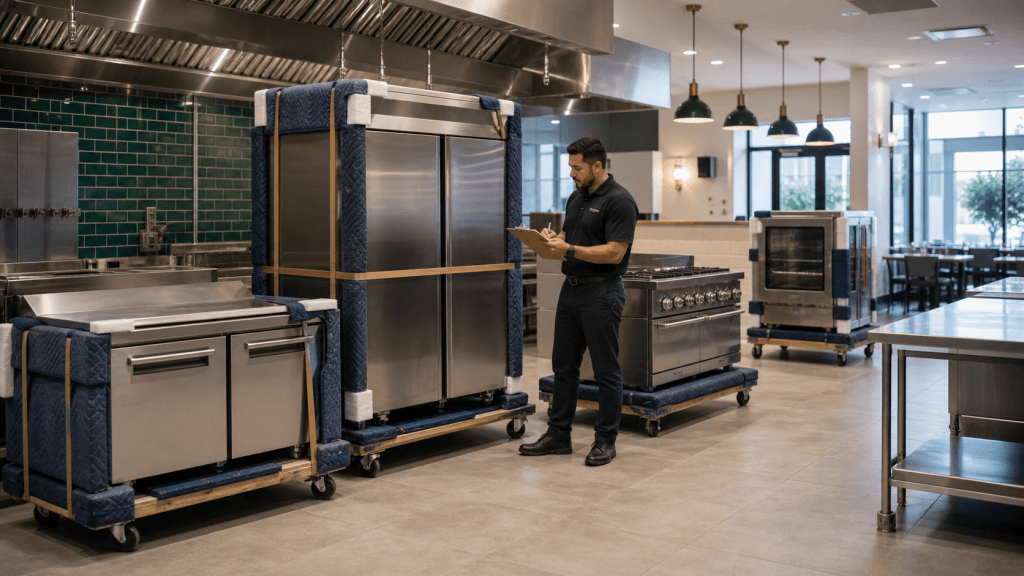
Stainless finishes need protection. Commercial kitchen equipment may be rugged in daily use but still vulnerable during freight handling. Doors, handles, corners, trim, control panels, glass, drawers, casters, and stainless faces can be scratched, dented, or bent if the item is dragged, poorly strapped, or staged against the wrong surface.
Access should be reviewed before the delivery date. Finished kitchens can have tight corridors, service entrances, ramps, elevators, loading docks, dining room paths, back-of-house turns, tile floors, thresholds, and finished walls. A unit may fit through the outside door but still create problems at an interior turn, doorway, prep line, or final room location.
Floor and wall protection can matter. Equipment may need to cross tile, polished concrete, vinyl, finished dining areas, hotel corridors, service hallways, or newly installed surfaces. If the site is already finished, the delivery plan should account for path protection, staging space, and where the equipment can wait safely before installation.
Receiving responsibilities should be clear. Some shipments only need to reach the dock or receiving area. Others require inside delivery, movement to the kitchen, placement near the final line, unpacking, debris handling, or coordination with installers. Utility connection, anchoring, leveling, hood integration, plumbing, gas, electrical work, startup, and inspection are separate responsibilities that should be assigned before the delivery.
Site readiness is a major factor. If the floor is incomplete, doorways are blocked, contractors are still working, utilities are not ready, or the receiver is unavailable, the equipment can end up staged in the wrong place. That creates extra handling and increases the chance of damage or delay.
Timing can affect an opening or operating schedule. Commercial kitchen equipment may need to arrive before a restaurant opening, hotel launch, inspection, contractor handoff, equipment startup, training day, menu test, or facility reopening. If the delivery window is missed, other teams may lose their planned installation or setup time.
HHX should not treat every kitchen equipment move as a standard pallet delivery. Some products can move through LTL or FTL when packaging, dock access, and receiving are straightforward. Others need higher-care coordination because of finish protection, tight access, appointment timing, inside movement, or customer-facing site conditions.
For business shippers, the useful details are practical: equipment type, dimensions, approximate weight, product photos, packaging photos, crate or pallet status, caster status, loose accessory list, pickup address, delivery address, receiving contact, dock status, access path, stairs or elevator notes, target date, appointment window, and placement expectation.
Before requesting support, shippers should gather product photos, packaging photos, dimensions, approximate weight, crate or pallet status, equipment list, accessory list, receiving contact, dock details, kitchen access notes, site readiness notes, target date, appointment window, and any installer or contractor coordination notes. Those details help HHX discuss a freight path that fits the equipment and the finished space.
Next step for shippers
Send the shipment details before the freight path is assumed.
HHX can review product dimensions, access notes, timing, packaging, and delivery requirements before the shipment is routed.
Contact HHX