Commercial equipment and fixtures
Pool Tables, Arcade Games, and Bulky Recreation Products
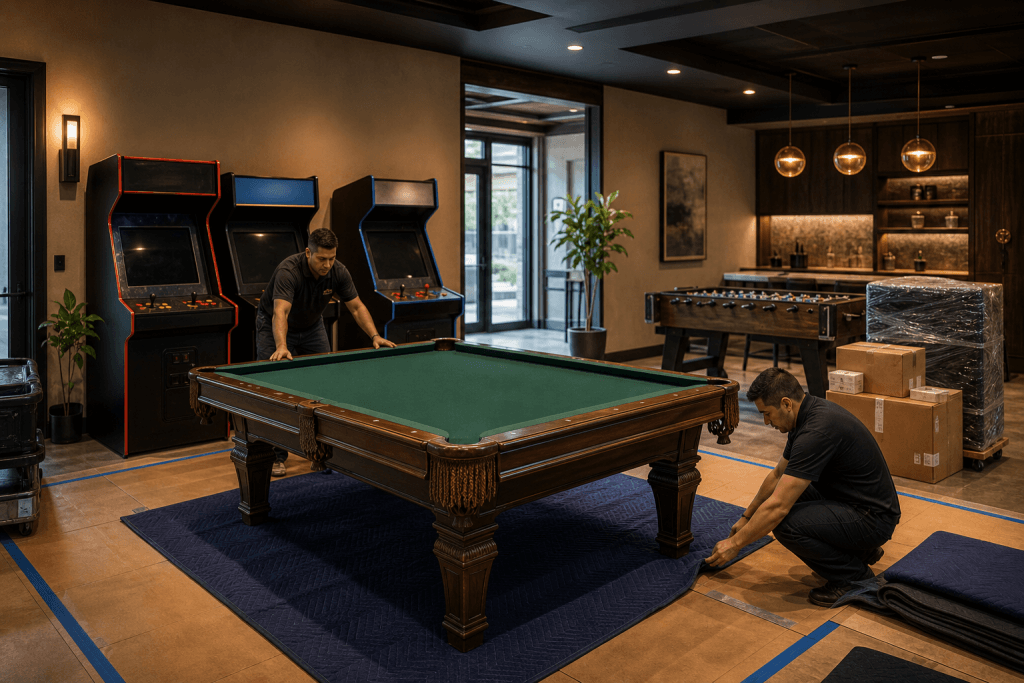
Pool tables, arcade games, and bulky recreation products are heavy, finished, and site-sensitive. Delivery planning should account for access, protection, timing, and final room expectations.
Article guide
What this article helps plan
A product shipper needs guidance for moving bulky recreation products into finished interiors or commercial entertainment spaces.
- Who needs to be aligned before pickup or delivery.
- Which product details affect the freight path.
- Where timing, access, condition, and final placement can create risk.
Pool tables, arcade games, and bulky recreation products create logistics problems that do not always show up in a basic freight quote. The product may be heavy, finished, awkward to maneuver, sensitive to surface damage, and expected to land in a finished room rather than at a dock.
Why this product needs planning
For recreation product brands, showroom operators, commercial entertainment teams, designers, hospitality teams, and project coordinators, the shipment often supports a customer-facing environment. That could be a game room, clubhouse, hotel lounge, showroom, private amenity space, entertainment venue, office recreation area, or finished residential project.
Details to confirm before pickup
- Product dimensions, weight, finish sensitivity, and packaging condition.
- Pickup and delivery addresses, access notes, receiving contacts, and appointment windows.
- Whether the delivery requires inside placement, stairs, elevators, dock access, or room-ready handling.
Destination and receiving details
The first step is identifying the product and how it is built. A slate pool table has different handling requirements than an arcade cabinet, foosball table, shuffleboard table, simulator cabinet, game table, boxed accessory set, or finished display piece. Dimensions, weight, piece count, packaging, disassembly status, and final room requirements should be discussed before pickup.
How HHX helps coordinate the move
Weight is only one part of the problem. Many recreation products are also difficult because of length, width, balance, legs, glass, electronics, cabinet finishes, felt surfaces, trim, corners, and hardware. A product can fit on a truck and still be difficult to move through doorways, stairs, elevators, hallways, or tight turns.
Finished surfaces need protection. Pool table rails, felt, cabinet panels, arcade cabinet faces, glass panels, painted surfaces, veneers, and polished wood can be damaged by poor staging or unclear handling notes. Photos and packaging details help make the condition expectation visible before the shipment moves.
Destination access can determine the delivery plan. A recreation product may need to enter through a lobby, service corridor, garage, freight elevator, stairwell, patio door, clubhouse entrance, or finished interior. Floor protection, door protection, clearance, parking, building hours, and receiver availability can all affect the handoff.
Final placement should be defined before the truck arrives. Some products only need to be delivered to a receiving area. Others need room placement, unpacking, positioning, or coordination with installers. Pool tables and similar products may also have leveling, assembly, or specialty installation needs that should be separated clearly from freight delivery expectations.
Timing matters when the space is part of a larger project. Recreation products may need to arrive before an opening, resident walkthrough, client installation date, furniture install, hospitality launch, or showroom reset. If the destination is not ready, the product can create extra handling. If it arrives late, the room may not be complete.
HHX should not describe every bulky recreation shipment as the same service. Some products can move through LTL or FTL when packaging and receiving are straightforward. Others may require white-glove or high-care coordination because of weight, surface sensitivity, inside access, final placement, or customer-facing timing.
For business shippers, the useful details are practical: product type, dimensions, weight, photos, packaging status, disassembly status, destination access, room placement expectations, receiving contact, and timing requirement. Those details help HHX discuss a freight path that fits the item and the site.
Before requesting support, shippers should gather product photos, dimensions, approximate weight, packaging condition, piece count, accessory list, pickup readiness, destination access notes, final placement expectations, appointment window, receiver contact, and any installer coordination notes. That information gives the move a clearer starting point.
Next step for shippers
Send the shipment details before the freight path is assumed.
HHX can review product dimensions, access notes, timing, packaging, and delivery requirements before the shipment is routed.
Contact HHX