Commercial equipment and fixtures
Commercial Gym Equipment Delivery and Placement
Commercial gym equipment delivery depends on more than freight cost. Machines, racks, benches, weights, and accessories need planning around site access, room readiness, appointment timing, and final placement.
Article guide
What this article helps plan
A business shipper needs practical guidance for delivering commercial gym equipment into a finished facility without access failures, damaged equipment, missed appointment timing, or unclear placement expectations.
- Who needs to be aligned before pickup or delivery.
- Which product details affect the freight path.
- Where timing, access, condition, and final placement can create risk.
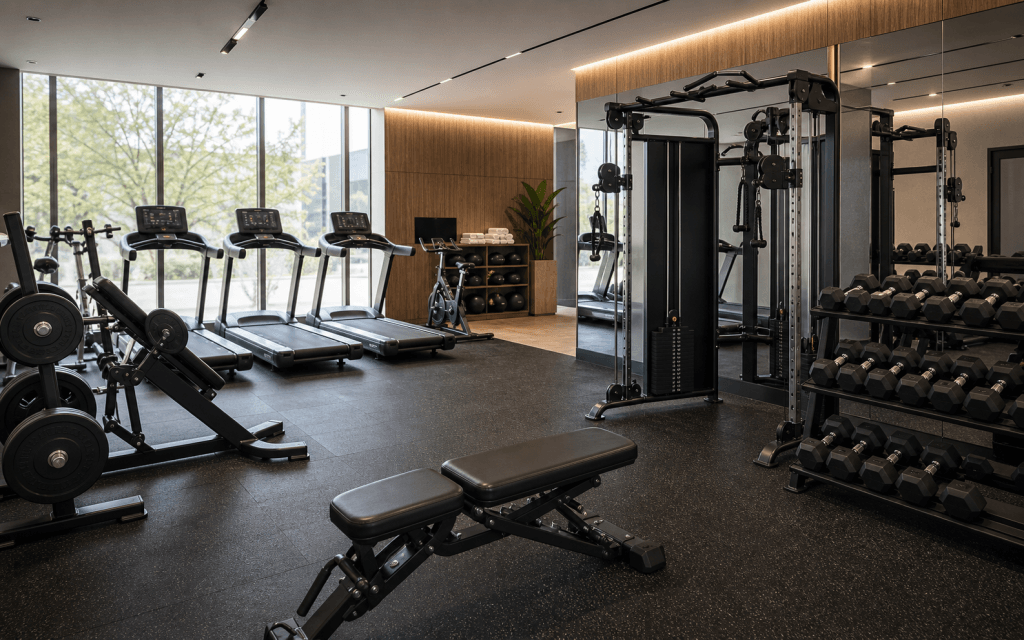
Commercial gym equipment looks durable, but that does not make it simple freight. A treadmill, cable machine, weight system, bench, rack, or full fitness room package can create delivery problems if the move is planned only around pickup and drop-off. The equipment may be heavy, awkward, partially assembled, boxed, crated, palletized, or paired with accessories that need to arrive together. The destination may be a finished gym, wellness room, apartment amenity space, hotel fitness center, office fitness room, school facility, clinic-adjacent wellness area, or showroom.
Why this product needs planning
For fitness equipment manufacturers, dealers, commercial gym brands, and property teams, the delivery is part of the customer experience. A machine that arrives late, damaged, separated from accessories, or without the right site plan can delay an opening or create unnecessary work for the receiving team. The logistics plan should account for what the equipment is, where it is going, who is receiving it, and what the room needs to look like when the delivery is complete.
Details to confirm before pickup
- Product dimensions, weight, finish sensitivity, and packaging condition.
- Pickup and delivery addresses, access notes, receiving contacts, and appointment windows.
- Whether the delivery requires inside placement, stairs, elevators, dock access, or room-ready handling.
Destination and receiving details
The first planning step is the equipment list. A single treadmill has different requirements than a full room with treadmills, ellipticals, benches, racks, dumbbells, mats, and cable equipment. Each item should be identified with dimensions, weight, packaging status, piece count, and any handling notes. If an item has a console, screen, pulleys, arms, casters, plates, loose accessories, or detachable parts, those details should be visible before pickup.
How HHX helps coordinate the move
Access is usually the reason gym equipment delivery becomes complicated. Equipment that fits on a truck may still be difficult to move through a building. Dock access, liftgate needs, elevators, stairs, hallway turns, door widths, floor protection expectations, parking limits, and room path all matter. A delivery plan should not discover the access problem when the equipment is already at the site.
Room readiness also matters. A finished gym may have flooring installed, mirrors in place, walls completed, and other trades working nearby. The receiver may need equipment staged in a specific area, placed near an installation zone, or handed off to a facilities contact. HHX content should not promise installation unless that scope is specifically approved, but delivery planning can still define final placement, room-ready staging, and handoff expectations.
Timing is often tied to a larger project schedule. Fitness equipment may be needed before a building opening, tenant walkthrough, facility launch, sales demo, or customer turnover. Appointment delivery, receiving contact confirmation, and clear arrival communication help keep the room schedule realistic. If the receiver is only available during certain hours, that information should be part of the shipment request, not a note discovered during dispatch.
Condition communication should stay connected to the product. Fitness equipment includes finished frames, rubber surfaces, electronics, consoles, upholstery, weight stacks, cables, and moving parts. If the receiver should inspect packaging, count components, retain documents, or note visible issues, the handoff should make that clear. A heavy machine still needs condition-aware handling when it is entering a customer-facing facility.
Commercial gym deliveries may use different service paths depending on the product and destination. Some moves may fit a coordinated LTL or FTL freight plan. Others may require higher-touch support because of room access, weight, item count, final placement expectations, or appointment timing. The right path depends on the equipment profile and the receiving environment, not only the freight lane.
HHX helps equipment shippers make those details visible early. What is moving? How many pieces are there? How is each item packaged? Where does it need to go inside the building? Who receives it? What access constraints exist? What date or appointment window matters? Those answers help turn a room full of heavy equipment into a coordinated delivery plan.
For business shippers, commercial gym equipment should not be treated like a generic load once it reaches the destination. The product has a room, a schedule, a receiver, and a customer expectation attached to it. Planning around those details helps protect the equipment, the project timeline, and the brand behind the delivery.
Before requesting support, shippers should gather the product list, dimensions, weights, packaging details, photos if available, pickup readiness, delivery address, dock or elevator notes, floor or room path details, appointment window, receiving contact, and final staging expectations. Those details give HHX the context needed to discuss a practical freight path and avoid leaving the final handoff to guesswork.
Next step for shippers
Send the shipment details before the freight path is assumed.
HHX can review product dimensions, access notes, timing, packaging, and delivery requirements before the shipment is routed.
Contact HHX