Specialty equipment and machinery
Compact Machinery and Specialty Equipment Freight
Compact machinery and specialty equipment freight needs planning around dimensions, weight, crate status, access, site readiness, power-sensitive components, and receiving coordination.
Article guide
What this article helps plan
A business shipper needs logistics support for compact machinery, specialty commercial equipment, or light industrial equipment moving into a facility, lab, showroom, or customer site.
- Who needs to be aligned before pickup or delivery.
- Which product details affect the freight path.
- Where timing, access, condition, and final placement can create risk.
Compact machinery and specialty equipment can be difficult to move because the product is usually more than a box on a pallet. It may include finished panels, sensitive components, control interfaces, internal parts, casters, leveling feet, accessories, loose hardware, crate panels, or equipment that needs to arrive ready for installation or commissioning.
Why this product needs planning
For equipment manufacturers, commercial product brands, light industrial suppliers, laboratory equipment companies, facility managers, installers, dealers, and project coordinators, the shipment is often tied to a specific site schedule. The equipment may be going into a lab, clinic, workshop, training room, showroom, production area, test facility, school, municipal facility, or customer location.
Details to confirm before pickup
- Product dimensions, weight, finish sensitivity, and packaging condition.
- Pickup and delivery addresses, access notes, receiving contacts, and appointment windows.
- Whether the delivery requires inside placement, stairs, elevators, dock access, or room-ready handling.
Destination and receiving details
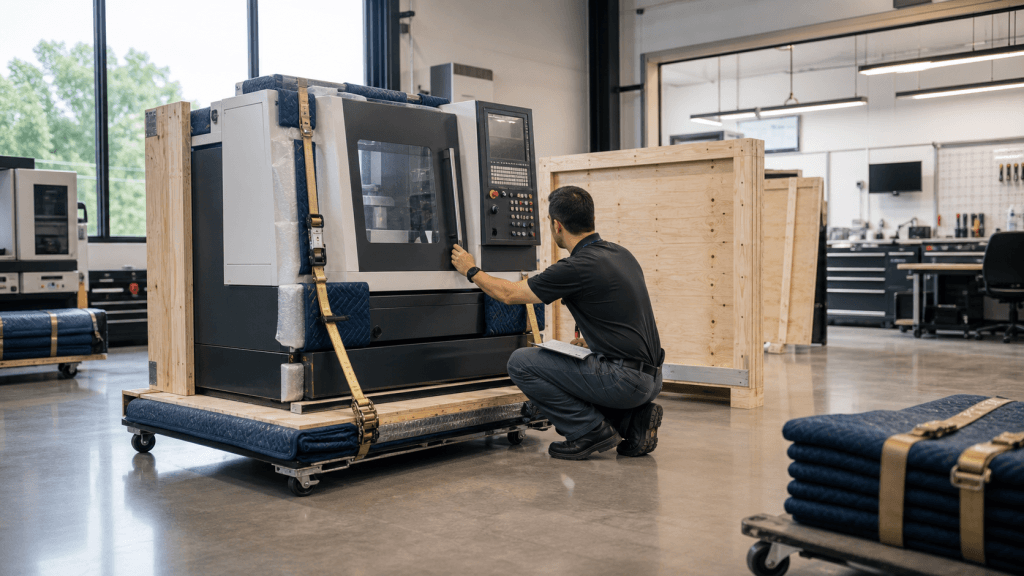
The first step is identifying the exact equipment and how it is prepared for freight. A compact CNC unit has different handling needs than a testing machine, fabrication tool, specialty printer, packaging unit, commercial appliance, benchtop production system, lab instrument, control cabinet, or crated accessory group. Dimensions, weight, crate status, attachment points, loose parts, and packaging condition should be clear before pickup.
How HHX helps coordinate the move
Packaging matters because many compact machines are not shaped like standard freight. They may have protruding control panels, glass windows, doors, handles, hoses, displays, switches, leveling feet, or delicate trim. The product may be sturdy in operation but vulnerable during transport if pressure is applied to the wrong surface.
Weight distribution should be reviewed. Some machines are compact but dense, with most of the weight concentrated low, high, or toward one side. That can affect pallet choice, lift points, forklift handling, pallet jack movement, dock access, and how the item should be secured inside the truck.
Facility access is often the deciding detail. A machine may fit through a loading dock but not through an interior door, lab hallway, service elevator, clean-room transition, production aisle, school corridor, clinic entry, or showroom path. Door widths, ceiling heights, turns, floor load, dock height, parking, elevator size, receiving hours, and final room access can all affect the delivery plan.
Surface and component protection should be discussed before the move. Control screens, machine doors, powder-coated panels, stainless surfaces, glass guards, calibration points, attached accessories, and exposed cabling can be affected by rubbing, vibration, impact, moisture, or poor staging. Product photos and packaging photos help make the risk visible before the equipment is picked up.
Receiving requirements should be specific. Some sites need delivery to a dock or receiving room. Others need the equipment moved to a lab, office suite, workshop, production floor, training room, or final installation area. If unpacking, debris handling, uncrating, placement, leveling, electrical connection, calibration, or commissioning is expected, those details should be separated from the freight move and assigned to the right party.
Timing matters when equipment is part of a launch, install, training session, production schedule, facility opening, tenant improvement, lab setup, service appointment, or customer acceptance. If the equipment arrives early, the site may not have a safe place to stage it. If it arrives late, installers, technicians, or operators may lose the planned window.
HHX should not treat every compact machinery shipment as standard commercial freight. Some equipment can move through LTL or FTL when packaging, access, and receiving are straightforward. Other equipment needs higher-care coordination because of value, sensitivity, facility access, appointment timing, or final placement expectations.
For business shippers, the useful details are practical: equipment type, dimensions, approximate weight, product photos, packaging photos, crate status, loose accessory list, lift points if known, handling notes, pickup address, delivery address, receiving contact, dock or no-dock status, doorway and elevator notes, target date, appointment window, and final placement expectation.
Before requesting support, shippers should gather product photos, packaging photos, dimensions, approximate weight, crate or pallet status, accessory list, handling notes, delivery address, receiving contact, dock details, interior access notes, target date, appointment window, site readiness, and any installer or technician coordination notes. Those details help HHX discuss a freight path that fits both the equipment and the facility.
Next step for shippers
Send the shipment details before the freight path is assumed.
HHX can review product dimensions, access notes, timing, packaging, and delivery requirements before the shipment is routed.
Contact HHX