Outdoor and oversized products
Boats, Jet Skis, Trailers, and Recreational Equipment Freight
Boats, jet skis, trailers, and recreational equipment need freight planning around dimensions, tie-down points, trailer readiness, pickup access, delivery access, and receiving coordination.
Article guide
What this article helps plan
A business shipper needs freight coordination for boats, jet skis, trailers, powersports equipment, or other recreational products moving between dealers, showrooms, customers, facilities, or events.
- Who needs to be aligned before pickup or delivery.
- Which product details affect the freight path.
- Where timing, access, condition, and final placement can create risk.
Boats, jet skis, trailers, and recreational equipment create a different kind of freight problem than boxed commercial goods. The product may already sit on wheels, float on a hull, include exposed surfaces, have a high visual finish, or require secure tie-down points that are specific to the equipment.
Why this product needs planning
For marine equipment brands, boat dealers, powersports dealers, outdoor product manufacturers, recreation equipment suppliers, showrooms, rental operators, and project coordinators, these shipments are often tied to inventory movement, dealer transfers, customer delivery, event setup, seasonal demand, repair movement, or showroom readiness.
Details to confirm before pickup
- Product dimensions, weight, finish sensitivity, and packaging condition.
- Pickup and delivery addresses, access notes, receiving contacts, and appointment windows.
- Whether the delivery requires inside placement, stairs, elevators, dock access, or room-ready handling.
Destination and receiving details
The first step is identifying exactly what is moving. A small boat on a trailer has different requirements than a jet ski, personal watercraft, utility trailer, enclosed trailer, powersports vehicle, small craft, accessory rack, dock component, marine display item, or mixed recreational equipment load. Dimensions, total length, width, height, approximate weight, trailer status, and accessory count should be clear before pickup.
How HHX helps coordinate the move
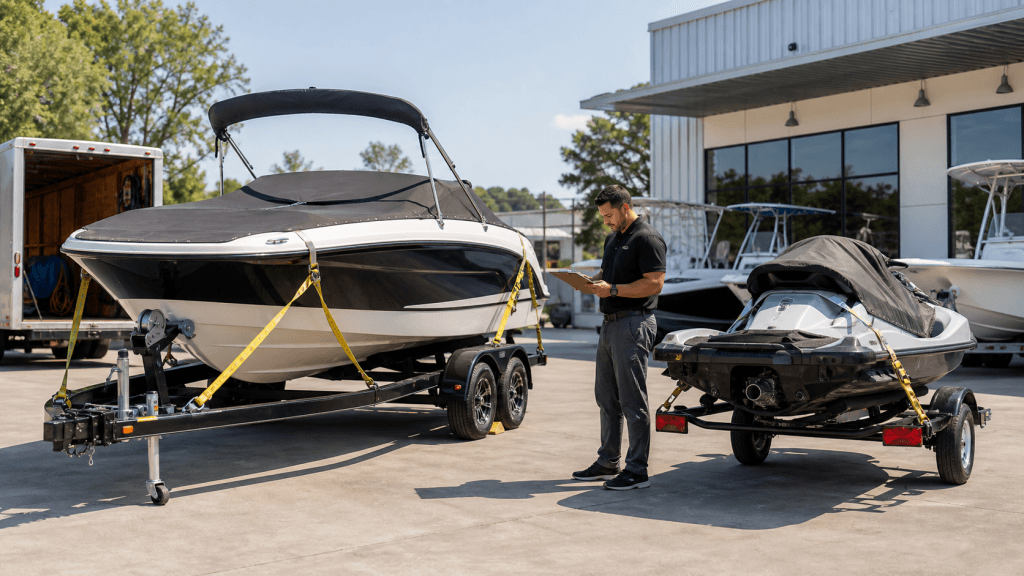
Trailer readiness matters. If the product is moving on its own trailer, the condition of the tires, lights, hitch, brakes, registration status, wheel bearings, straps, winch, jack, and safety chains can affect whether the trailer can be moved as planned. If the product is not road-ready, it may need a different freight setup.
Tie-down planning should be specific. Boats, jet skis, and powersports equipment can be damaged if straps are placed across the wrong surface, tightened unevenly, or allowed to rub against finished panels, covers, seats, windshields, rails, towers, or trim. Photos of the product and trailer help identify the practical securement plan before the shipment moves.
Dimensions can be easy to underestimate. Overall trailer length, tongue length, beam width, tower height, windshield height, canopy height, cover position, and accessory mounts can affect routing, equipment selection, loading, parking, and delivery access. A product may be compact on paper but still awkward once the trailer and attachments are included.
Pickup and delivery access should be reviewed early. These products may move from marinas, dealerships, storage yards, showrooms, service centers, event sites, resorts, residential communities, commercial lots, or rental facilities. Gate access, parking room, loading space, yard surface, appointment timing, receiving contact, and turn radius all affect the handoff.
Condition expectations should be visible before the move starts. Hull finish, decals, seats, covers, windshields, towers, rails, accessories, lights, trailer paint, and wheels can all be affected by poor handling or unclear pickup documentation. Product photos, trailer photos, and close-ups of existing condition help reduce confusion at delivery.
Accessories should be listed. Covers, keys, remotes, batteries, chargers, loose cushions, life jacket kits, racks, spare tires, removable towers, paperwork, and boxed parts should not be assumed to be included unless they are documented. Loose accessories need a clear place in the move plan.
Timing can matter for seasonal sales and event use. Recreational equipment may need to arrive before a showroom launch, customer pickup, rental season, weekend event, trade show, dealer transfer, resort opening, or repair appointment. If the delivery date slips, the product may miss the window where it was needed.
HHX should treat these shipments as equipment moves, not generic freight. Some recreational equipment can move through LTL or FTL when the product, trailer, access, and receiving details are straightforward. Other moves may need more detailed coordination because of size, value, finish, timing, or site access.
For business shippers, the useful details are practical: product type, trailer status, total dimensions, approximate weight, product photos, trailer photos, tie-down points, cover status, accessory list, pickup address, delivery address, receiving contact, pickup access, delivery access, target date, and appointment requirements.
Before requesting support, shippers should gather product photos, trailer photos, dimensions including total trailer length, approximate weight, trailer readiness notes, tie-down notes, accessory list, pickup and delivery access notes, receiving contact, target date, and any appointment requirements. Those details help HHX discuss a freight path that fits the product and the route.
Next step for shippers
Send the shipment details before the freight path is assumed.
HHX can review product dimensions, access notes, timing, packaging, and delivery requirements before the shipment is routed.
Contact HHX